E-Toxic Mural Mock-Up
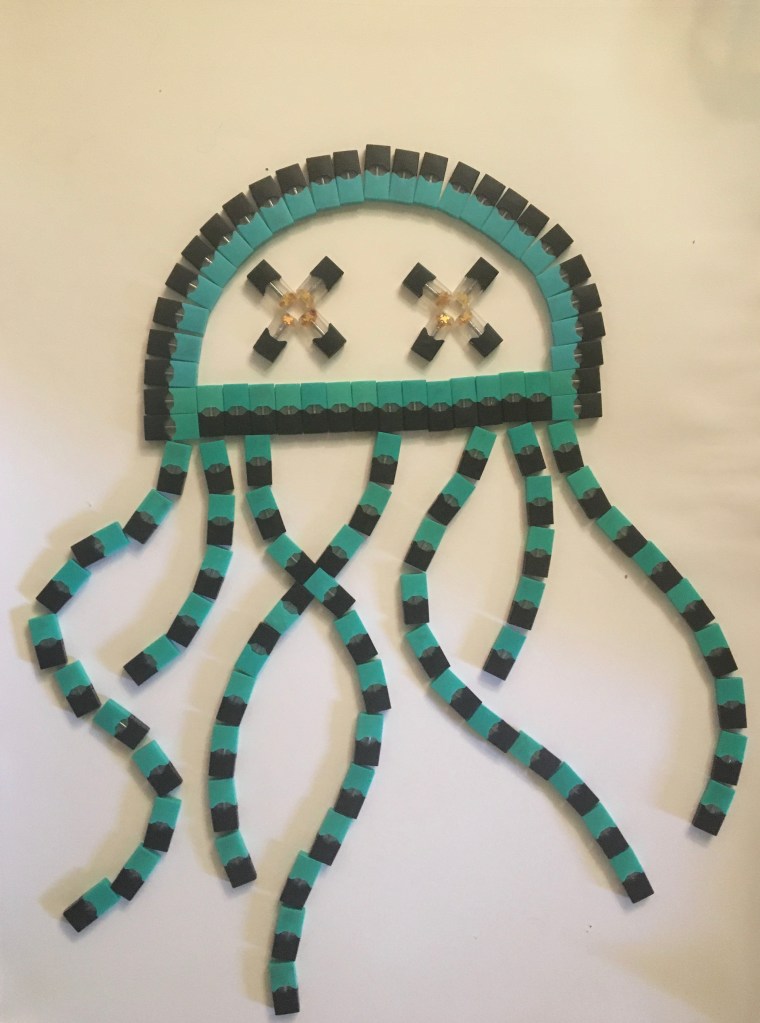
Dead Jeallyfish made out of 118 JUUL Pods 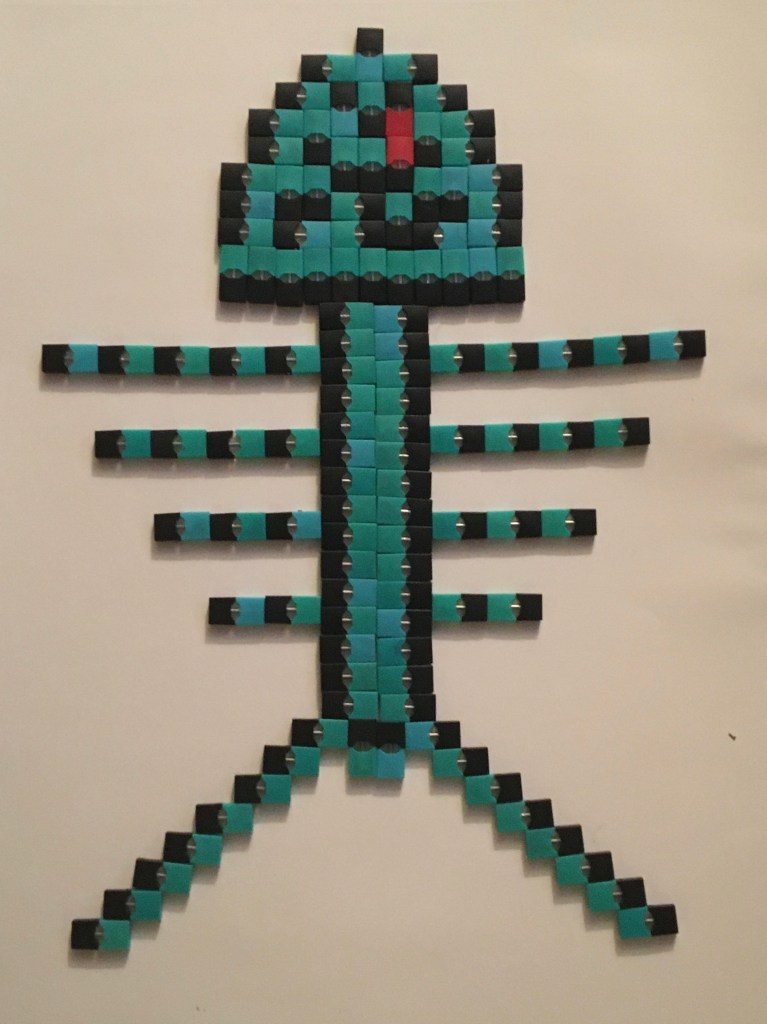
Fish Skeleton made out of 118 JUUL Pods
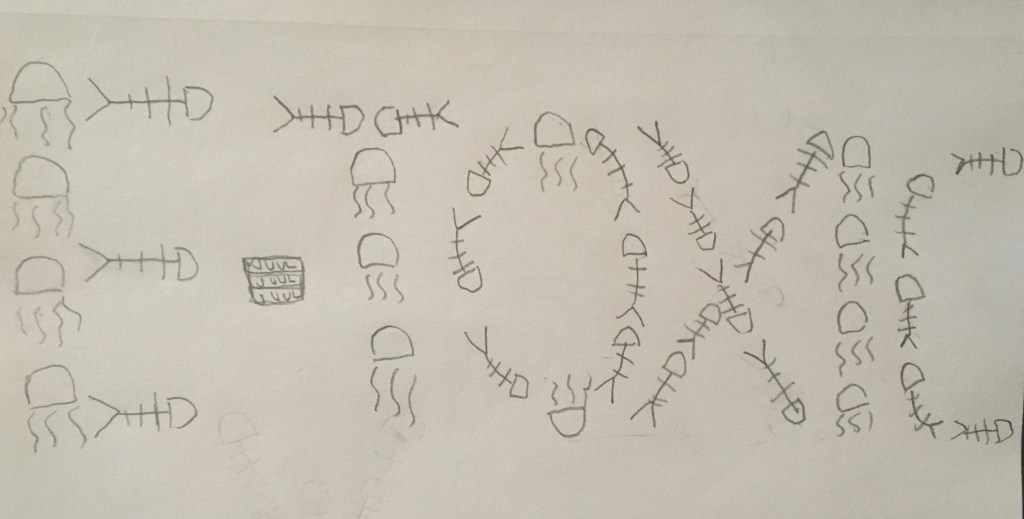
Summary
This mural will be constructed completely out of JUUL pods and devices. It would need to be at least 6ftx6ft. The dead sea life made of 118 JUUL pods per animal will spell out either E-Toxic and E-Wasteful. The dash in the word will be made of JUUL pod devices. I decided on this design because of the impacts that E-waste has on the environment, specifically marine life. E-waste, particularly JUULs/pods, are rarely recycled properly. When they are disposed of improperly, they end up in landfills or directly in the environment. When this happens, the electronic mechanism in the JUUL/pods degrade and heavy metals that are toxic to wildlife run off into waterways and kill aquatic life. This is a huge threat to our ecosystems that many people are not aware of. The purpose of this mural is to bring attention to this issue and hopefully get viewers to reevaluate their consumption habits surrounding nicotine devices. The process was more difficult than I intended. It took a lot of geometric creativity to be able to arrange the JUUL pods in an order that made sense visually as a sea creature and to further depict that sea animal as dead. I had been saving JUUL pods for over a year now and only had enough to make the animals one at a time since they both required over 100 JUUL pods. If this mural was to be actualized, it would be quite a task to collect the number of pods that would be needed. I had a really fun time making the mock up for this mural and hope to collect enough JUUL pods to complete it.
Project Proposal 2:
Consume: E-Wasteful
Issue: With the rise of e-cigarettes, many college students choose to smoke using a JUUL. While they may be aware of the potentially harmful chemicals they are ingesting when they choose to JUUL, many are not aware of the adverse effects that JUULs and JUUL pods have on the environment. JUUL pods are a short-term disposable product with lasting effects on the environment. People need to be aware of the impacts of short-term disposable niccotine consumption.
Approach: Have students reflect on their own consumption by viewing and interacting with a mural that expresses the hazards of JUUL on the environment
Genre: Interactive Art Installation
Strategy: Make mural, display in trafficked place on campus, have student interact by leaving their pods so that they may be added to the mural
Who: The GMU community (mostly people 18-28 years old)
What: “E-Wasteful Mural”
Where: TBD
When: start when class groups form – end at the end of project
Why: To facilitate in reflection on consumption of e-waste, specifically JUULs/pods, and to bring awareness to the environmental impacts that this type of consumption leads to.
How:
- Form group in class
- Split into 2 teams
- Research: research the environmental impacts of e-waste, how to properly dispose of JUULs/pods, alternatives – gathering statistics to display in mural
- Design: come up with compelling image and strategy to complete mural
- Submit proposal
- Start JUUL pod collection
- Start construction
- Leave up for a few weeks so people can “donate” their pods to the mural
- Count the pods
- Display total + time collected on mural
- Document on blog
Art Discussion:
Art from Scrap:
This company intimately understands the concept of “re-use”. They understand that in order to create art they you need materials but they also understand that our planet has a finite amount of materials to use so they bridge up-cycling with art in a way that is accessible to their community members and helps the process of making art more sustainable. This is the same concept I want to bring to my “consume: art project. I want to be able to take a material that people dispose without thought and make a piece that provokes thought while also building that piece with sustainable tactics.
Chopsticks:
I consider myself fairly environmentally conscious and attempt to make personal decisions everyday so that I can contribute to a culture of sustainability. Plastic has been at the forefront of my mind when it comes to reducing my waste but I never considered the impact using chopsticks have. Since plastic is so bad, whenever I consumed wooden chopsticks I would think “its not that bad, it’ll decompose”, by worrying about plastic I forgot about the impacts of consuming tree products. The tactic the artist used with the sound of a chainsaw and tree falling every few minutes is a successful one that I’ve seen used across many issues and I thought that it was an impactful part of this piece. This piece moved me so much that now I’m on the hunt for reusable chopsticks to add to my reusable arsenal of utensils.
Trash People:
This project had a profound impact on me. We often talk about how in a few years there will be more plastic in the water than fish but we rarely turn that kind of comparison back onto ourselves and this piece forces viewers to do that. The pure scale of this project is also shocking. While it looks huge, with hundreds of sculptures, the trash used was such a minute amount compared to the trash on the planet. The message of legacy by placing these “people” in places of historic or cultural importance makes the viewer come to terms with the fact that trash will be our legacy.
Media Discussion
The Story of Stuff and The Story of Water
These short films are incredibly informative and introduce people to the flaws in our current culture and economic system. One thing that the Story of stuff video went into that I have been thinking a lot about is the true value of stuff and how that value is reflected onto workers. We as a culture have such cognitive dissonance around the systems of production and consumption. As we learned during our share project, we are incredible disconnected from our local food systems but this concept extends to all things we consume. The dollar store example really stuck with me. Looking at a single item that we perceive as simple and small was the result of countless people’s labor and when we pay just 1$ for an item we are disconnecting ourselves from the labor system and therefore are unaware of the harmful impact our “savings” have on people’s lives. Quick and cheap products also lead to a culture of consumption and needless waste which harms the health of our planet for a multitude of reasons. Our consumption has large social and environmental impacts on our communities and the world at large. The Story of water video goes into the corporatization of common goods such as water and the harmful impacts that privatization can have on communities. While both of these videos are extremely important, I think that they missed the opportunities to link all of these struggles (consumerism, privatization, pollution, etc) by not identifying the economic system that is at the root of all of these issues: capitalism. This system thrives off of exploitation in the name of never ending growth and free market principles. Until we start integrating critiques of our economic system in our conversations about social and environmental struggles, we will only be addressing symptoms.

